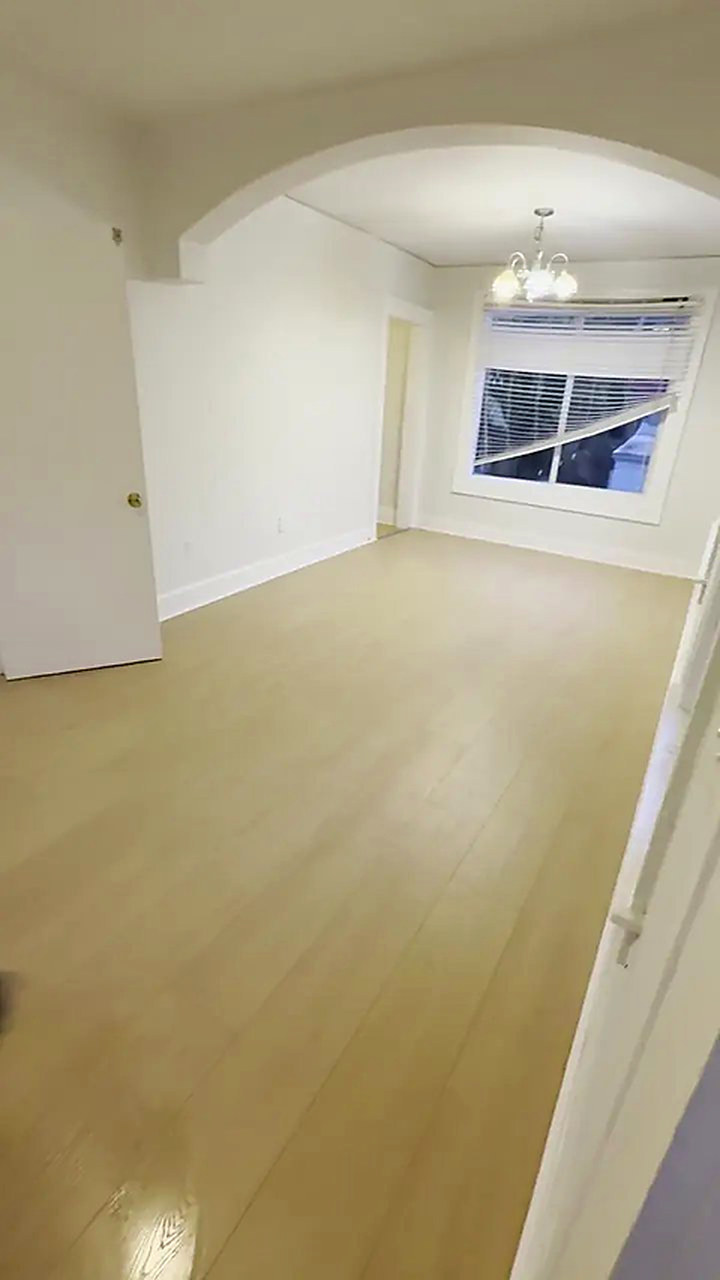
Laminate Flooring
Laminate gives you a convincing wood floor for less per square foot, and it goes down fast. Coconut Creek is home base, and the crews work the whole stretch from Jupiter to Homestead, Palm Beach through Broward into Miami-Dade. Almost nobody decides between laminate and vinyl without talking it through in the room, which is what the in-home visit is for.
Four boxes. We call you back to set a time.
The product
Modern laminate is four layers pressed together: a high-density fiberboard core, a printed decorative layer that photographs real wood, a clear wear layer over the top, and a backing underneath. The printing has got good enough that the embossing follows the grain, so the texture you feel lines up with the grain you see.
That construction buys you two things. It’s harder to scratch than most wood floors, and it costs less than the hardwood it’s imitating. What it doesn’t buy you is a waterproof product. The core is fiberboard, and if water sits on a seam long enough it will find its way in and swell. Newer water-resistant lines hold out spills for hours rather than minutes, which handles real life. It’s still not the floor we’d put in a house with a pool door in the living room.
Walter’s honest read: if the room is dry and the budget matters, laminate is excellent value. If the room sees water, vinyl plank is the better floor, and he’d rather say so at the visit than sell you the one you asked about.
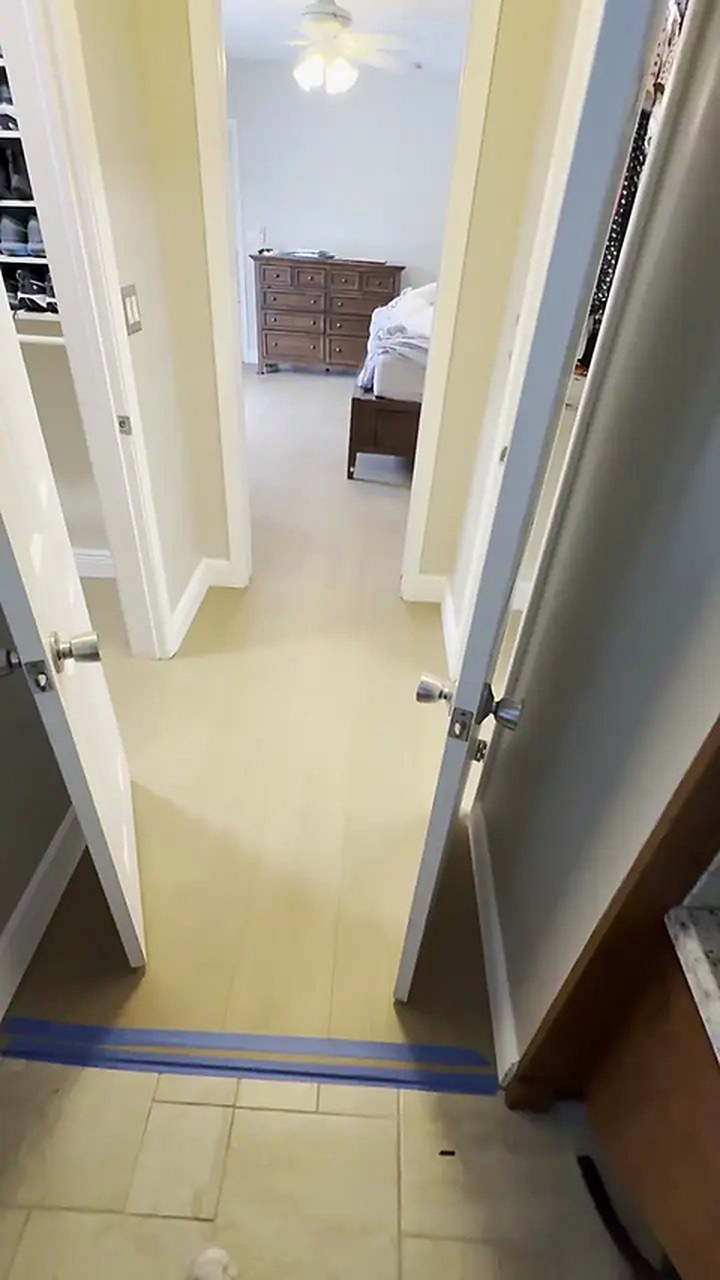
The comparison everyone asks for
Most South Florida buyers use laminate and vinyl interchangeably. They’re different products, and the difference matters in exactly three places.
| Vinyl plank | Laminate | |
|---|---|---|
| Water | Waterproof through the whole plank | Water-resistant at best, fiberboard core |
| Underfoot | Softer, warmer, quieter | Harder, reads closer to real wood |
| Scratch resistance | Good | Better |
| Best rooms | Kitchens, baths, laundry, pool-door houses | Dry bedrooms, living rooms, offices |
| Install schedule | A room in a day, a house in two to three | The same |
Water. Vinyl is waterproof through the whole plank. Laminate is water-resistant at best. This is the deciding factor for kitchens, bathrooms, laundry rooms, and any house where wet feet come in from outside.
Feel and sound. Laminate is harder underfoot and reads slightly more like real wood when you walk on it. Vinyl is softer, warmer and quieter. Some people prefer one, some the other, and nobody can tell which they prefer from a website.
Scratch resistance. Good laminate has the edge here. Its wear layer is genuinely tough, which is why it holds up well under dog nails and dining chairs.
Both click together over the slab, and both install on the same schedule: a room in a day, a house in two to three. If you want the full picture on the other side of that table, the vinyl page goes deeper on rigid core and wear layers. If you already know which one you want, book the in-home visit and we’ll measure and price it.
What to look at
Thicker planks feel more solid underfoot and bridge minor slab imperfections better. Most residential laminate lands between 8mm and 12mm. The AC rating is the abrasion class, AC1 to AC5, a real published durability number rather than marketing language. Most homes want AC3 or better. A hallway with dogs and kids wants AC4.
A micro-beveled edge gives each plank a defined line and reads more like real wood. A square edge reads flatter and more contemporary. Small detail, visible every day.
Wider and longer planks make a room look larger and mean fewer seams. Narrow planks read more traditional. This is the choice people change their mind on most often, and it settles much faster standing in the room with your own furniture in it than it does off a screen.
Install day
The old floor comes out first. Carpet and tack strip pull quickly. Existing laminate or vinyl comes up fast. Tile takes longer and adds dust, and we’ll have priced that in.
Then the slab gets checked, because a floating floor telegraphs every dip underneath it. High spots get ground, low spots get filled with leveling compound, and the surface gets swept clean. On a concrete slab, laminate needs a vapor barrier underlayment, no exceptions. Slabs here push moisture upward and the core of a laminate plank is the one part of it you never want damp.
Planks click together starting from the longest wall, with an expansion gap at the perimeter that gets covered by the baseboard or quarter round. That gap is not optional. A laminate floor installed tight to the wall will buckle in the middle of a room the first humid month, and it is the most common laminate failure we get called out to look at.
Then transitions at the doorways, baseboards reset, debris hauled out. You can walk on it that night. Here’s how the whole job runs, from the first call to the crew leaving.
Service area
Laminate goes into houses all across our area, from Coral Springs and Parkland down through Fort Lauderdale to Miami. Every city we cover is listed here.
A note on condos: laminate is a hard, floating floor and it transmits impact sound. Buildings above the ground floor almost always require an acoustic underlayment with a minimum rated value. We install to whatever your building’s rules specify, so bring the document to the visit.
Laminate questions
No. Water-resistant lines handle spills that get wiped up, but the core is fiberboard and standing water will eventually swell it. For wet rooms we recommend vinyl.
A single room is usually a day. A whole single-level home is normally two to three. Stairs and tile tear-out add time.
Often yes, if the tile is flat, well bonded, and the added height works at doors and appliances. The person who comes out checks this at the estimate.
Yes, with the sound underlayment your building requires and, in most buildings, written approval before work starts.
400 square feet.
Laminate generally prices close to vinyl, and often a little under it. The exact number comes at the in-home visit, measured and priced in the same appointment, then a signing link goes to your phone.
Dry rooms and a tight budget point to laminate. Water anywhere in the picture points to vinyl plank. It’s a five-minute conversation in the room with the person who comes out, and there’s no wrong answer we’d push you off.
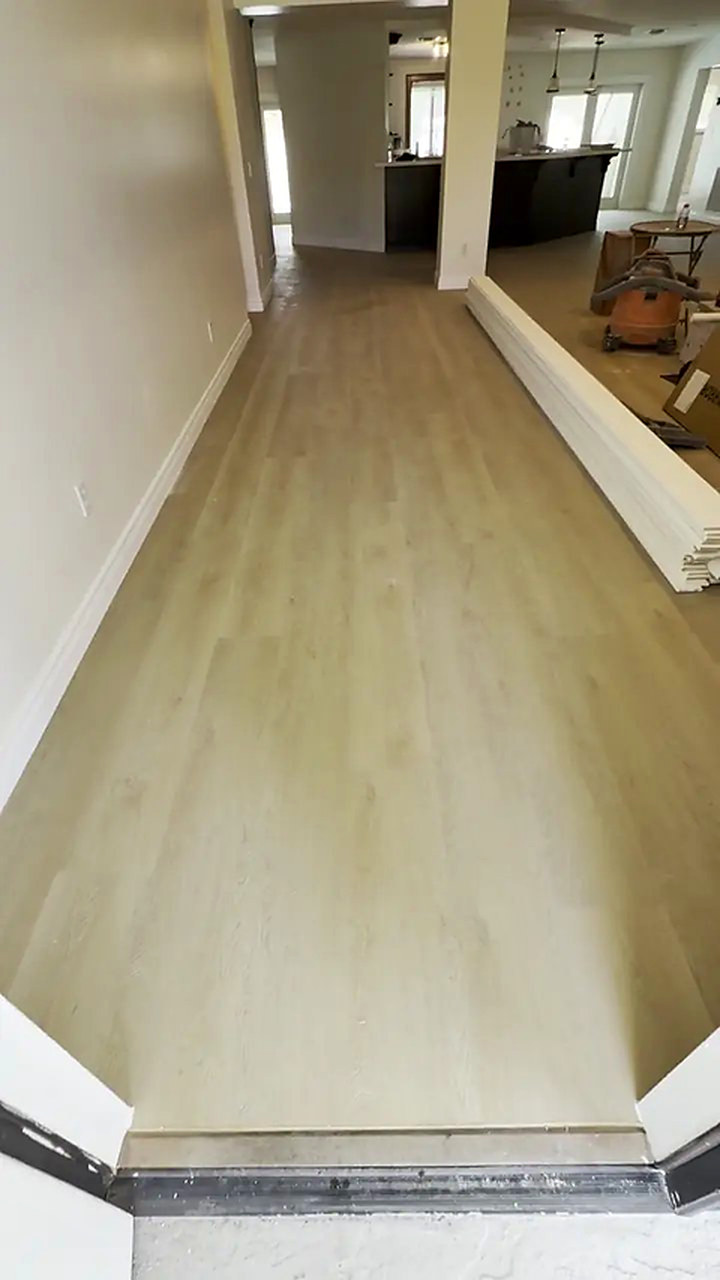
Book the visit
Someone from our team comes to the house, walks the rooms, talks the two products through against how you actually use them, measures the space and gives you the price at that same visit. Projects 400 square feet and up.
Contact us
Four boxes, or one phone call. Someone from our team comes to the house, walks the rooms with you, and gives you the price standing in the room.
We call you back to set a time.