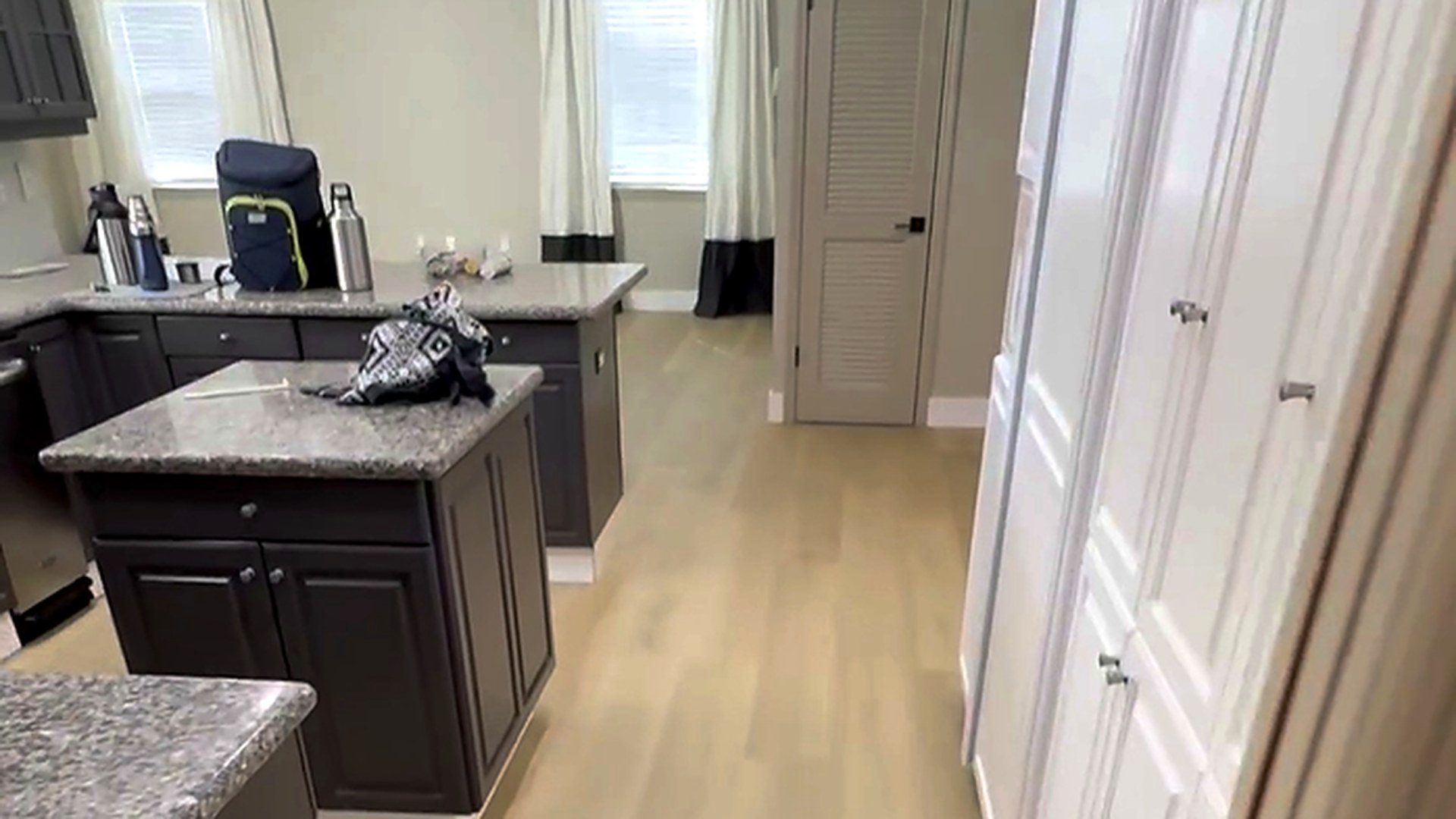
Vinyl & Luxury Vinyl Plank
Vinyl is about 60% of everything we install, and a whole house is normally finished in two to three days. We’re based in Coconut Creek and we work from Jupiter down to Homestead, across Palm Beach, Broward and Miami-Dade. Someone from our team comes to the house, walks the rooms, measures, and gives you the price standing in the room.
Four boxes. We call you back to set a time.
Why this floor, here
Most homes between Jupiter and Homestead sit on a concrete slab, a few feet above sea level, in air that stays humid nearly all year. Solid wood moves in that. Laminate can swell at the seams if water sits on it. Vinyl doesn’t care.
A rigid-core plank is a waterproof product all the way through. A dishwasher line lets go, a hurricane shutter gets left open, a kid comes in from the pool eight times in an afternoon, and the floor is fine. That’s the practical reason vinyl took over Florida, and it’s why it’s 60% of what our crews put down.
It’s also quieter than tile, warmer to walk on, and forgiving of a slab that isn’t perfectly flat. And it installs fast, which is the part most people don’t find out until they’ve lived through a tile job.
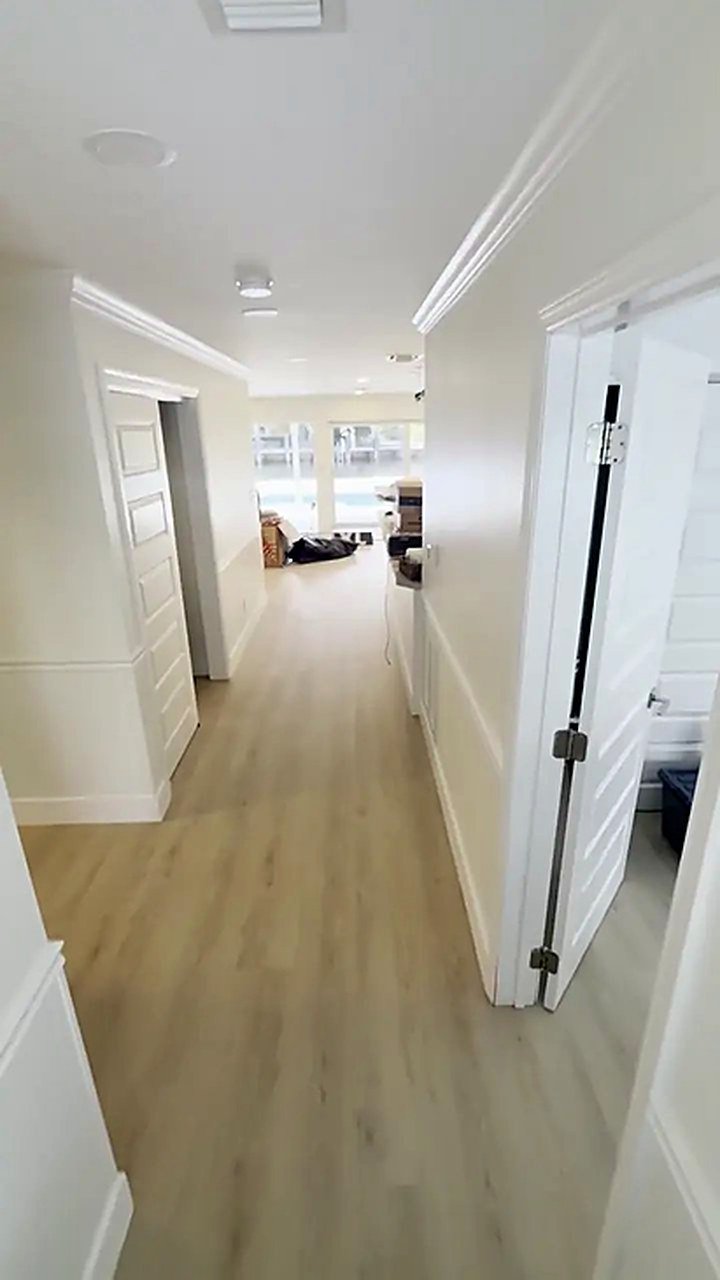
The product
A few decisions get made at the in-home visit. None of them are complicated once someone walks you through them in the room they apply to.
Stone Plastic Composite. A click-lock plank with a dense mineral core. It installs floating, which means the planks lock to each other rather than being glued to the slab, so the whole floor moves as one sheet. Typical spec on what we install: 8mm thick, a 28 mil wear layer, and a moisture barrier underlayment already attached to the back of the plank. That pre-attached barrier matters more here than almost anywhere else, because every house is on a slab and slabs push moisture upward.
Bonded directly to the slab. It’s flatter underfoot, quieter, and it’s the right call in some condos and in large open runs where a floating floor would want expansion breaks. It takes longer to install and the slab has to be prepped properly first.
This is the number that decides how long your floor looks new, and it’s the one most people have never heard of. It’s the clear layer over the print film, measured in mils. A thin wear layer is fine in a guest room and wrong in a hallway with two dogs. Most of what we install runs a 28 mil wear layer, which is a genuinely heavy-duty residential spec.
Wide planks read modern and make a room look larger. Narrow planks read traditional. Matte and low-sheen finishes hide South Florida’s number one flooring complaint, which is footprints and sand. Layout is a choice too: most floors run straight, but herringbone and chevron read beautifully in an entry, use more material, and take longer to set.
Blue Armor, CPF Floors, Manhattan SPC, Premium Vinyl 8mm and Whisper Woods Lite, among others. Blue Armor goes into more of our jobs than everything else combined. We install the Decora tile range and RainCoat MAX laminate as well, because people cross-shop them.
The parts people don’t expect
A lot of South Florida houses have tile sound enough to stay in place, which saves a demolition day and a great deal of dust. What it needs first is a skin coat: a thin leveling layer troweled over the tile to fill the grout lines and bring the surface flat. Without it you get a floor that telegraphs every grout line underneath it.
Stair runs are their own job. Each tread and riser is cut and wrapped individually, with a matching nosing, and a full stair run can add a day on its own. It is the single most common reason a project runs to three or four days instead of two.
On most jobs the baseboard comes off and goes back on, or gets replaced. A whole-house job can involve several hundred linear feet. Doorways get the right piece: a T-molding where plank meets plank, a reducer where it meets a lower floor, an end cap at a slider. Getting those wrong is the most visible cheap-job tell in the house.
Install day
A single room is usually one day. A whole house is usually two to three. Here’s where the time goes.
The crew arrives in the morning. They pull the old floor first: carpet and tack strip, old vinyl, or laminate. If there’s tile coming out, that’s a different conversation and it adds time and dust, and we’ll have flagged it at the estimate.
Then the slab gets checked. High spots get ground down, low spots get filled with a leveling compound, and the floor gets swept clean, because a plank floor telegraphs everything underneath it. Skipping this step is the single most common reason a vinyl floor develops a hollow or a click a year later.
The plank sits in the house before it goes down. Rigid core moves far less than wood, but it still wants to reach the temperature of the room it’s being installed in.
Underlayment goes down where the product calls for it. Then the planks, starting from the longest straight wall, cut around door jambs and cabinet toe kicks. An expansion gap gets left around the perimeter, which the baseboard covers. That gap is not optional on a floating floor. Transitions go in at the doorways, baseboards get reset, and the crew hauls out the debris when they leave.
You can walk on it as soon as a room is finished.
Pricing
You get the number at the in-home visit, and it is the installed figure: material, tear-out, subfloor prep, underlayment, labor and debris removal.
Priced in person, in your house, at the same visit as the measurement. It is not a teaser rate for material only, and it is not a range that moves once the crew arrives.
We don’t publish a figure here, because the things that decide it are all in your house. Two houses the same size can price differently depending on what is coming out and what the slab needs first, which is the whole reason somebody has to stand in yours before you get a number. A signing link goes to your phone if that number works for you.
What moves your job
That’s why the final number gets given in person. The person quoting you is standing on your slab, looking at your doorways, counting your stairs. Nobody can price those over the phone, including us.
Vinyl questions
Sometimes. If the tile is well bonded, flat, and the added height won’t cause a problem at doors and appliances, a floating rigid-core floor can go straight over it. Loose tile, wide grout lines, or a height issue at the front door means the tile comes out first. Whoever comes out to measure will tell you which one you have while they’re there.
Rigid-core vinyl is waterproof as a material. Standing water won’t swell it the way it swells laminate. The seams and the perimeter are still a path for water to reach the slab, so a burst pipe is still a burst pipe. For everyday spills, pool traffic, and mopping, it’s the most forgiving floor we install.
A single room is usually one day. A whole house is normally two to three. Stairs, skin-coat leveling over old tile, and baseboard replacement are what push a job to four.
You get the number at the free in-home visit, measured and priced in the same appointment. It is the installed figure, covering material, tear-out, prep, labor and debris removal. We don’t publish a price here because the tear-out, the slab prep, the stairs and the baseboard are what move it, and none of those can be judged off a website.
Ask us at the estimate. It depends on the job and what’s in the room, and we’d rather answer it honestly on site than promise something in writing here. Clearing closets, breakables, and electronics ahead of time always speeds up the day.
400 square feet. Around a living room plus a hallway.
Often, yes. Slabs in South Florida can push moisture upward, and most manufacturers require a vapor barrier or a specific underlayment for a slab install. We spec it into the job rather than leaving it to chance.
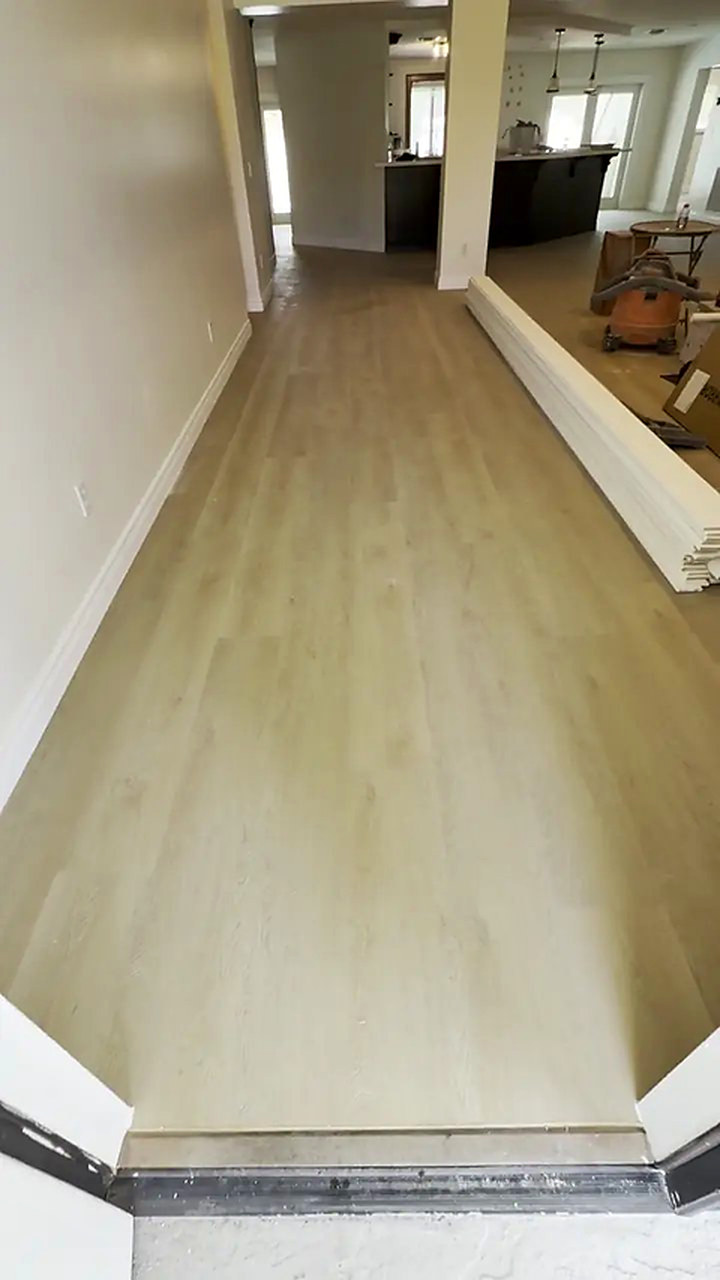
Book the visit
Someone from our team comes out, walks the rooms with you, measures the space and gives you the price at that same visit. Projects 400 square feet and up.
Contact us
Four boxes, or one phone call. Someone from our team comes to the house, walks the rooms with you, and gives you the price standing in the room.
We call you back to set a time.